Nigeria Sinotruk Local Sales Center 2025 Howo New Model
Top One World Famous Brand - Sinotruk Nigeria
Nigeria Sinotruk Local Sales Center 2025 Howo New Model
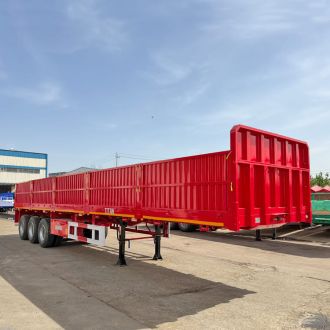
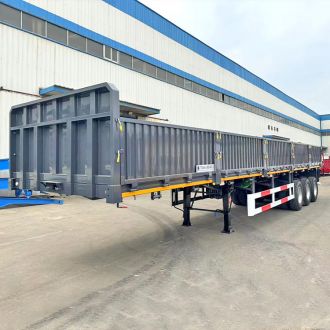
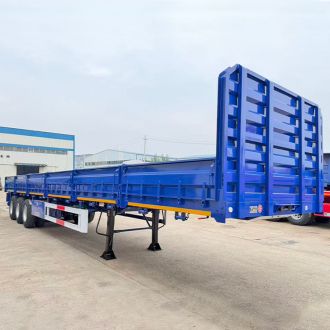
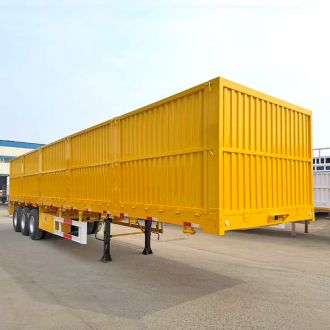
A cargo semi trailer is designed for transporting general freight on an open loading platform, while a drop side trailer or side wall semi trailer adds side structures that help define the cargo area and provide more controlled access to the load. The right configuration depends less on the trailer name and more on the type of cargo, loading method, and side structure required during transportation.
1.1 General cargo needs an accessible loading platform
A cargo semi trailer is fundamentally a transport platform for general freight. Its open structure allows cargo to be placed on the deck using different loading methods, making it suitable for operations where an enclosed trailer body is unnecessary.
The main advantage of this type of trailer is flexibility. General freight can include packaged goods, bagged products, agricultural cargo, construction materials, bundled materials, and other loads that do not require a closed cargo box. The trailer can accommodate different cargo arrangements while retaining a defined loading area.
The sideboard configuration adds another layer of practicality. Instead of leaving the deck completely open, the trailer creates a physical boundary around the cargo. That boundary can help organize the loading space while still keeping the body accessible.
This is why a three-axle sideboard trailer can be useful for mixed freight operations. It combines an open deck with side structures rather than forcing the operator to choose between a completely open flatbed and a fully enclosed trailer.
1.2 Side access is part of the trailer's working function
The side doors are not simply decorative panels. They affect how the operator interacts with the cargo during loading and unloading.
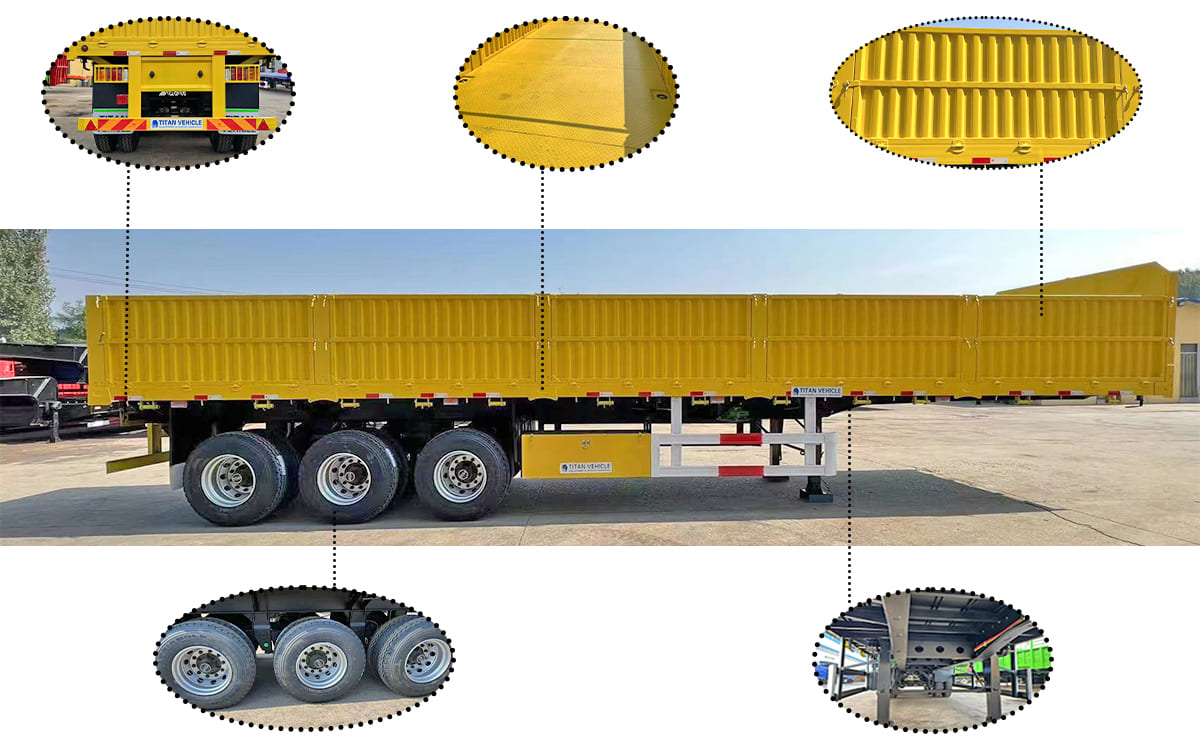
The standard three-axle sideboard configuration uses a reinforced side-door frame with 1.5 mm corrugated high-strength steel panels. The available side-door heights are 800 mm and 1,000 mm.
This gives the operator a defined side structure while retaining side access through the door arrangement. The choice between 800 mm and 1,000 mm changes the height of the surrounding sideboard, so the selection should reflect the cargo rather than an assumption that a taller side door is automatically better.
For mixed freight, this type of sideboard can provide a useful balance between access and containment. The cargo remains accessible from the open body, while the side structure creates a more defined loading area.
1.3 A side wall changes the way cargo is contained
A side wall semi trailer provides a more defined boundary around the deck. This can be useful when the cargo needs to remain within a clear loading area instead of sitting on a completely open platform.
The side wall becomes particularly important when cargo is stacked, bundled, bagged, or arranged in a way that benefits from a surrounding structure.
However, the side wall itself does not determine the full performance of the trailer. Its frame, panel material, panel thickness, height, and opening arrangement all contribute to the actual configuration.
That is why the term “side wall semi trailer” is not enough for technical comparison. Two trailers can use the same product name while having different side-door constructions.
1.4 A three-axle sideboard trailer remains a general-purpose cargo body
The three-axle configuration discussed here is not designed around one single commodity. Its standard sideboard arrangement is intended to provide a flexible cargo platform.
The reinforced side-door frame and 1.5 mm corrugated high-strength steel panel create the basic side structure, while the 800 mm or 1,000 mm side-door options allow the body to be configured around different cargo requirements.
This makes it a practical middle ground for operators who need more structure than a flatbed but more accessibility than a closed trailer.
The important point is that the trailer body should be considered as part of the cargo-handling process. The best configuration is the one whose side structure matches the way the freight is actually handled.
 Drop Side Trailer | Cargo Side Wall Semi Trailer For Sale in Nigeria
2.1 Flatbed trailers prioritize an open deck
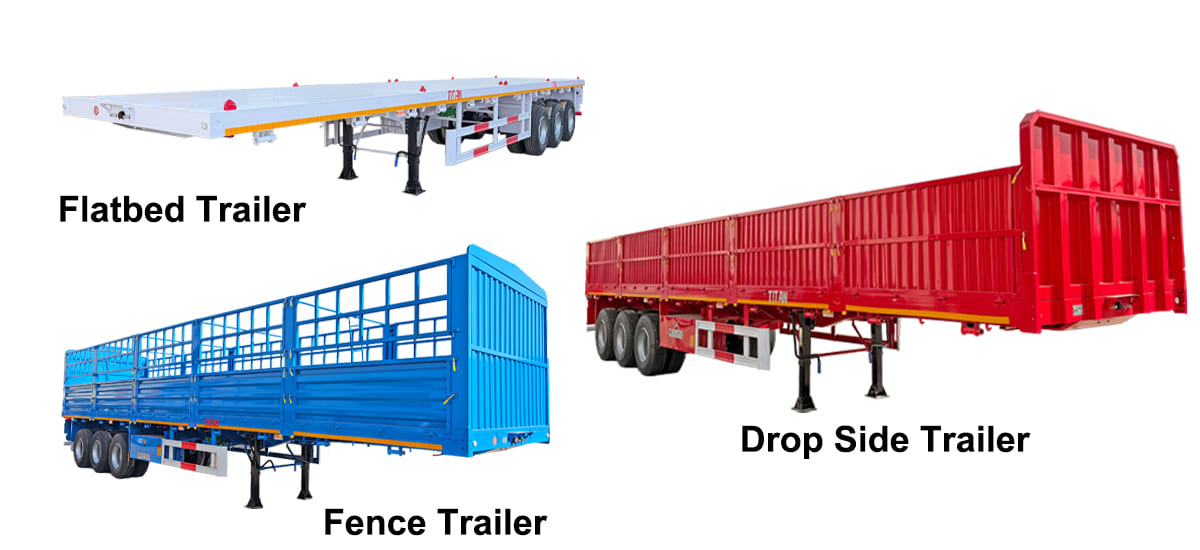
A flatbed trailer has the most open structure of the three configurations. Its deck is accessible from multiple directions, making it useful when unrestricted loading access is more important than having high surrounding side panels.
This can be advantageous for long, bulky, or irregular cargo that is independently secured on the deck.
The limitation is that the flatbed provides less built-in side structure. When the cargo benefits from a defined side boundary, a sideboard or side wall design may be more appropriate.
The decision is therefore based on the relationship between cargo access and cargo containment.
2.2 Fence trailers add a vertical boundary without creating a solid wall
A fence trailer places vertical structures around the deck while retaining an open body.
Compared with a flatbed, the fence structure creates a clearer boundary around the cargo. Compared with a side wall semi trailer, the body remains more open.
This makes fence trailers useful to consider when the operator wants a surrounding cargo structure without using solid side panels.
The exact design can vary, so the product name should again be supported by technical details. The height, construction, and opening arrangement determine how the fence trailer works in practice.
2.3 side wall semi trailers provide a more substantial side structure
A side wall semi trailer uses side panels as an integral part of the cargo body.
The three-axle sideboard model in this article is an example. Its side-door frame is reinforced and the side panel is made from 1.5 mm corrugated high-strength steel. The doors can be 800 mm or 1,000 mm high.
This provides a more defined cargo boundary than a flatbed while maintaining access through the side-door structure.
For general cargo, this configuration can be useful when the operator wants the deck to remain open but still needs side panels around the load.
2.4 A drop side trailer emphasizes side access
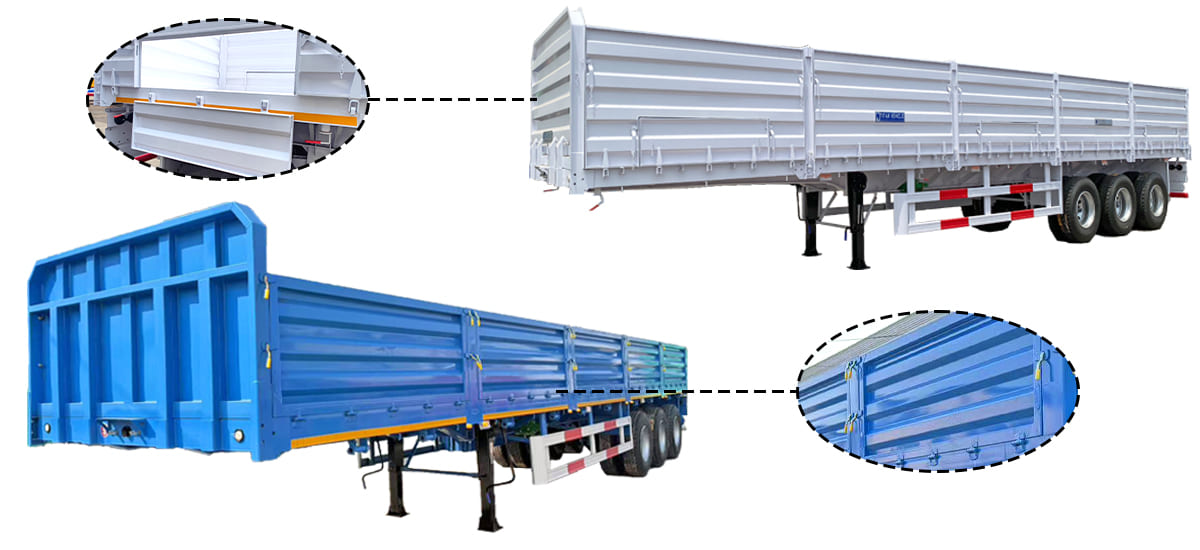
A drop side trailer places particular emphasis on access through the side structure. The purpose of the movable or opening side arrangement is to make the cargo more accessible from the side when required.
This can be useful in operations where rear loading is not always convenient or where different loading positions are used from one site to another.
The actual mechanism, panel height, frame design, and construction depend on the individual model. For the specified three-axle sideboard configuration, the confirmed information is the reinforced side-door frame, 1.5 mm corrugated high-strength steel, and 800 mm or 1,000 mm side-door height.
The term “drop side” should therefore be understood as a functional description, while the detailed construction should come from the actual manufacturer specification.
2.5 The main structural difference can be summarized simply
| Trailer Type | Main Body Concept | Side Structure | Typical Selection Focus |
|---|---|---|---|
| Flatbed Trailer | Open loading deck | Minimal side structure | Maximum deck accessibility |
| Fence Trailer | Open deck with vertical boundary | Fence-style structure | Open cargo with surrounding boundary |
| Drop Side Trailer | Side structure with greater side access | Opening/drop-side arrangement | Frequent side loading or unloading |
The choice should not be reduced to which trailer is “better.” Each structure solves a different loading problem. For a Nigerian fleet, the relevant question is how much structure the cargo needs and how often the operator needs access through the sides.
 Drop Side Trailer | Cargo Side Wall Semi Trailer For Sale in Nigeria
3.1 The standard trailer is designed around general cargo
The three-axle sideboard configuration is defined by a reinforced side-door frame and 1.5 mm corrugated high-strength steel.
It also offers 800 mm or 1,000 mm high side doors.
This combination provides a general-purpose sideboard structure for operators carrying different types of freight. The body is not tied to one specific commodity, so the side structure is designed around flexibility.
For a logistics operator, the value of this configuration lies in its ability to serve different cargo types without requiring a completely different trailer body for every shipment.
3.2 The grain configuration uses thicker side panels
The grain trailer increases the side-panel thickness from 1.5 mm to 2 mm.
Both use corrugated high-strength steel, but the grain configuration specifies a thicker panel. This is a direct construction difference and should be reflected in the product specification.
The important point is not simply that “2 mm is stronger.” The more accurate statement is that the grain configuration uses a more heavily specified side panel than the standard three-axle sideboard trailer.
This difference gives the buyer a clear technical basis for distinguishing the two configurations.
3.3 Internal reinforcement is added to the grain sideboards
The grain configuration also includes reinforcement bars inside the sideboards.
This means the difference is not limited to the outer corrugated panel. The internal structure of the sideboard is also specified differently.
That is important during product comparison because two trailers can have similar-looking external panels while using different internal constructions.
In the grain configuration, the sideboard is therefore made up of several defined elements: a reinforced frame, 2 mm corrugated high-strength steel, and internal reinforcement bars.
3.4 Six small doors make the grain body more specialized
The grain trailer further includes six small doors with leak-prevention strips.
This feature distinguishes it from the standard three-axle sideboard configuration.
The supplied information does not specify the dimensions or exact opening mechanism of these six doors, so those details should be confirmed separately. What is clear is that the small doors and leak-prevention strips are part of the grain trailer specification.
Their presence means that the grain body is not simply a standard side wall semi trailer with thicker panels. The opening arrangement itself is different.
3.5 The sideboard differences work together
The grain configuration should be understood as a complete sideboard design rather than a single upgraded component.
| Feature | Three-Axle Sideboard Trailer | Grain Trailer |
|---|---|---|
| Side-Door Frame | Reinforced | Reinforced |
| Corrugated Side Panel | 1.5 mm high-strength steel | 2 mm high-strength steel |
| Side-Door Height | 800 mm or 1,000 mm | Not stated |
| Internal Sideboard Reinforcement | Steel reinforcement bars | Steel reinforcement bars |
| Small Doors | / | 6 |
| Main Application | General cargo | Grain and specified agricultural cargo |
3.6 Grain cargo changes the body requirement
Grain is different from packaged freight because the cargo is handled as an agricultural bulk product rather than as individual cartons, bags, or pallets. That changes the function of the sideboard.
For this reason, the grain configuration combines a thicker 2 mm corrugated high-strength steel panel with internal reinforcement and six small doors with leak-prevention strips.
The trailer still belongs to the wider cargo semi trailer category, but its body has been adapted to a more specific cargo requirement.
This is a useful example of why a trailer should be designed around its actual application instead of using one generic sideboard specification for every type of freight.
 Drop Side Trailer | Cargo Side Wall Semi Trailer For Sale in Nigeria
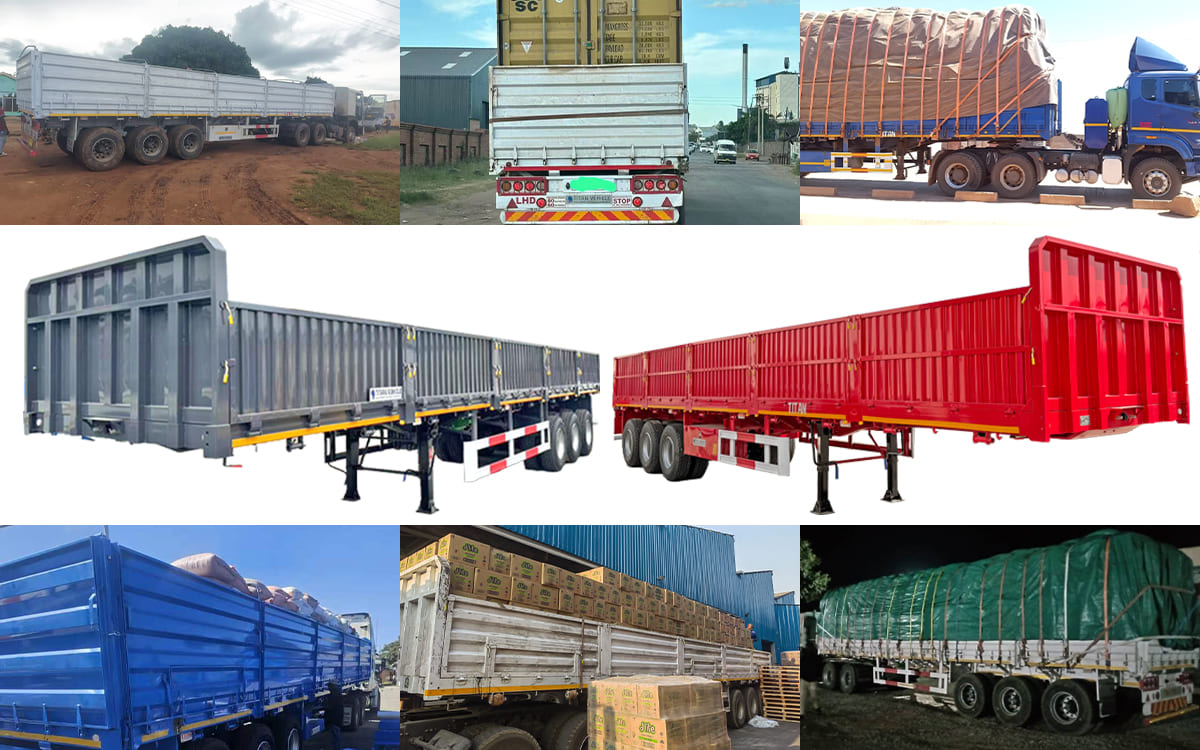
4.1 General packaged goods need a balance between access and containment
Packaged goods are often loaded as boxes, bags, pallets, bundles, or other discrete units.
For these applications, the sideboard needs to provide a practical cargo boundary without making access unnecessarily difficult.
The standard three-axle sideboard trailer can be considered for this type of operation because its reinforced frame and 1.5 mm corrugated high-strength steel panels provide a defined side structure, while the 800 mm or 1,000 mm side-door options allow the body to be configured for different cargo needs.
The exact height should be selected according to the cargo rather than treated as a universal quality ranking.
4.2 Construction materials can benefit from side access
Construction-related cargo often varies in shape, size, and loading method.
When the operator frequently needs to approach the cargo from the side, a drop side trailer can be useful because the side structure becomes part of the loading workflow.
This is especially relevant where different loading sites use different approaches. A trailer that can provide side access may be more flexible than a body designed primarily around rear loading.
The advantage is therefore operational: the trailer can be adapted to the way the cargo is handled.
4.3 Agricultural freight can require a more specialized sideboard
Agricultural cargo is not one single type of load.
Packaged agricultural products can often be treated as general freight, while grain creates a different body requirement.
The grain configuration supplied for this article addresses that difference through its 2 mm corrugated high-strength steel side panels, reinforcement bars inside the sideboards, and six small doors with leak-prevention strips.
These features make the grain trailer more specialized than the standard sideboard configuration.
For an operator that regularly transports grain, those details should therefore be treated as part of the body specification rather than optional decoration.
4.4 The choice of 800 mm or 1,000 mm side doors should follow the cargo
The standard three-axle sideboard trailer offers 800 mm and 1,000 mm side-door heights.
The higher configuration provides a taller side structure, while the lower configuration provides a different balance between side structure and access.
Neither should be described as universally better because the supplied information does not define such a ranking.
The correct choice depends on the cargo arrangement and the required side access.
For a buyer, this is a small but meaningful specification decision. A difference in side-door height can change the usable character of the cargo body even though the basic trailer remains the same.
4.5 A flatbed may be more appropriate when sideboards are unnecessary
Not every open-cargo application needs side walls.
Where cargo is large, long, or independently secured, the unrestricted access of a flatbed may be more useful than a surrounding sideboard.
This is particularly relevant when the cargo itself does not benefit from a defined side boundary.
A side wall semi trailer becomes more useful when surrounding structure contributes to the cargo arrangement. A drop side trailer is more relevant when that structure must also provide convenient side access.
The body should therefore solve an actual cargo-handling problem rather than add structure simply because more structure appears to mean a more capable trailer.
4.6 Mixed-freight operators should consider their dominant cargo
A transport company in Nigeria may carry several kinds of freight.
If most shipments are general packaged cargo, a standard three-axle sideboard configuration may provide the required versatility.
If grain is a major part of the operation, the grain-specific sideboard configuration may be more appropriate because its panel thickness, internal reinforcement, and six small doors are specifically defined.
If side loading is a regular requirement, the operator may place greater emphasis on a drop side trailer configuration.
The most suitable body is therefore the one that fits the most common operating pattern.
 Drop Side Trailer | Cargo Side Wall Semi Trailer For Sale in Nigeria
5.1 Start with the actual application
For buyers in Nigeria, the product selection process should begin with the cargo rather than a generic trailer name.
A general-freight operator may need the standard three-axle sideboard configuration with 1.5 mm corrugated high-strength steel and 800 mm or 1,000 mm side doors.
A grain operator may need the more specialized arrangement using 2 mm corrugated high-strength steel, internal reinforcement bars, and six small doors with leak-prevention strips.
An operation that frequently loads from the side may place greater emphasis on a drop side trailer.
This application-first approach makes the product specification much clearer before commercial details are discussed.
5.2 The product name should be supported by technical details
The terms cargo semi trailer, drop side trailer, and side wall semi trailer are useful for describing and finding products, but they do not replace the actual specification.
For the standard sideboard configuration, the important body details are already defined: reinforced side-door frame, 1.5 mm corrugated high-strength steel, and 800 mm or 1,000 mm high side doors.
For the grain configuration, the important additional details are 2 mm corrugated high-strength steel, internal reinforcement bars, and six small doors with leak-prevention strips.
These details allow a buyer to distinguish between configurations even when different manufacturers use similar product names.
5.3 Price should be considered only after the body specification is clear
A buyer searching for cargo semi trailer price, drop side trailer price, or side wall semi trailer price may see very different quotations.
A meaningful comparison requires the body configuration to be identified first.
For example, a standard sideboard trailer with 1.5 mm panels is not technically identical to a grain trailer with 2 mm panels and internal reinforcement. Similarly, an 800 mm side-door configuration should be distinguished from a 1,000 mm configuration.
The supplied information does not include a fixed selling price, so no specific price should be assigned to these models. The commercial value depends on the actual configuration and the full chassis equipment included in the quotation.
5.4 Chassis details should be confirmed separately
The product information provided for this article focuses mainly on the sideboard structure. It confirms the general model as a three-axle sideboard semi-trailer, but it does not provide complete specifications for the axle brand, axle rating, suspension, tire size, braking system, kingpin, or landing gear.
Those details should therefore be obtained from the manufacturer's final technical specification rather than assumed.
This separation is useful because the body configuration can already be evaluated from the available information, while the remaining chassis specification needs to be defined for the actual order.
5.5 A Nigerian fleet may prioritize standardization or specialization
The right choice can depend on how the trailer will be used across the fleet.
A mixed-freight logistics company may prefer the standard sideboard configuration because it is designed around general cargo.
An agricultural transport operation focused on grain may prefer the specialized grain configuration.
A company with frequent side-loading requirements may consider a drop side trailer.
There is no need to use one body specification for all three situations. The practical choice is the configuration that corresponds to the fleet's main cargo pattern.
5.6 The final order should identify the sideboard construction clearly
Before production, the chosen body should be described in precise terms.
For the standard three-axle sideboard trailer, the specification should identify the reinforced side-door frame, 1.5 mm corrugated high-strength steel panels, and 800 mm or 1,000 mm side-door height.
For the grain configuration, it should identify the reinforced frame, 2 mm corrugated high-strength steel panels, internal steel reinforcement bars, and six small doors with leak-prevention strips.
The rest of the trailer configuration can then be added according to the manufacturer’s confirmed chassis and accessory specification.
This prevents the final order from relying only on a general product name such as “side wall semi trailer.”
5.7 Choosing the right trailer comes down to the cargo workflow
The most useful distinction among these trailers is how their structure interacts with the cargo.
A flatbed emphasizes open access.
A fence trailer adds a vertical boundary while retaining an open structure.
A side wall semi trailer creates a more defined side enclosure.
A drop side trailer places greater emphasis on side access.
The three-axle sideboard trailer adds another useful choice through its 800 mm or 1,000 mm side doors and 1.5 mm corrugated high-strength steel panels.
The grain configuration takes a different approach with 2 mm corrugated high-strength steel, internal reinforcement bars, and six small doors with leak-prevention strips.
For buyers in Nigeria, the strongest selection method is therefore to start with the cargo and loading workflow, then choose the body structure that supports that operation.
6.1 What is a cargo semi trailer used for?
A cargo semi trailer is used to transport general freight on an open or sideboard-type platform. The exact body configuration depends on the cargo and loading method.
6.2 What is the difference between a drop side trailer and a side wall semi trailer?
A drop side trailer emphasizes access through the side structure, while a side wall semi trailer provides a defined side-panel boundary around the cargo deck. The exact construction depends on the individual model.
6.3 What side-door heights are available on the three-axle sideboard trailer?
The specified three-axle sideboard trailer is available with 800 mm or 1,000 mm high side doors. The appropriate height depends on the cargo and the desired side structure.
6.4 What makes the grain trailer different?
The grain configuration uses 2 mm corrugated high-strength steel side panels, compared with 1.5 mm on the standard three-axle sideboard trailer. It also includes internal reinforcement bars and six small doors with leak-prevention strips.
6.5 Why does the grain trailer use 2 mm side panels?
The supplied grain configuration specifies 2 mm corrugated high-strength steel as part of its sideboard construction. The thicker panel is combined with internal reinforcement and the specified small-door arrangement.
6.6 Is a flatbed trailer the same as a side wall semi trailer?
No. A flatbed provides a more open deck with minimal surrounding structure, while a side wall semi trailer uses defined side panels around the cargo area.
6.7 What should buyers in Nigeria check first?
The first step is to define the cargo and loading method, then select the appropriate body structure. For the specified models, the main differences are the side-door height, panel thickness, internal reinforcement, and small-door arrangement.
 Drop Side Trailer | Cargo Side Wall Semi Trailer For Sale in Nigeria
Add: PLOT 3, OBA, AKRAN AVENUE, IKEJA, LAGOS